2026 Top Types of Steel Containers for Global Buyers

Time:2026-10-05 Author:Oliver
0%

Global buyers are not choosing a steel box alone. They are selecting strength, capacity, handling performance, and service life for a specific supply chain. Steel Containers may travel through humid ports, crowded warehouses, freezing roads, and high-temperature production sites. Each environment exposes different weaknesses.

Common options include dry shipping containers, open-top units, flat racks, steel drums, intermediate bulk containers, tanks, bins, and roll-off containers. Their designs vary in wall thickness, door structure, coating, ventilation, lifting points, and internal volume. A food processor may need hygienic surfaces and easy cleaning. A construction company may value reinforced corners and forklift access. A chemical manufacturer requires careful material compatibility and professional inspection.

Edwin Basson, Director General of worldsteel, has described steel as “a permanent material” because it can be recycled repeatedly without losing its properties. That principle matters, but it does not make every container sustainable automatically. Poor maintenance, excessive weight, unsuitable coatings, and short service cycles can reduce practical value. No container is perfect.

This guide examines the top types of Steel Containers for global buyers in 2026. It considers durability, payload efficiency, corrosion resistance, customization, repair needs, and responsible end-of-life planning. Buyers should also verify dimensions, testing records, surface treatment, supplier capability, and destination requirements before ordering. Prices attract attention. Traceable quality protects the investment.
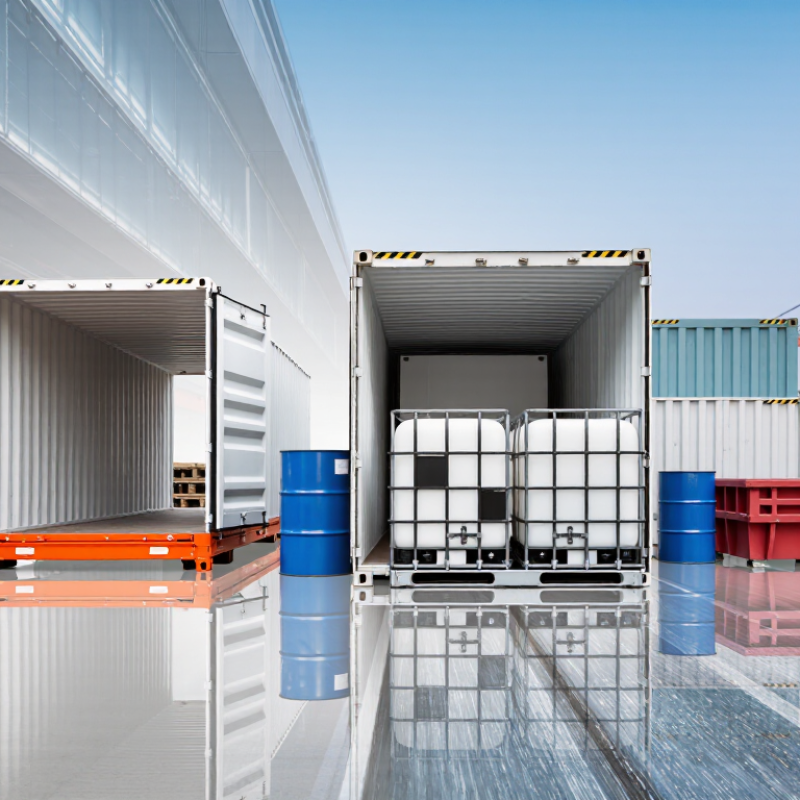
2026 Top Types of Steel Containers for Global Buyers

Steel Container Categories for 2026: ISO 668 Sizes and Global Trade Demand

Steel container demand in 2026 will remain closely tied to ISO 668 dimensions. These standards help ports, vessels, rail systems, and warehouses handle units consistently. The most traded sizes are 20-foot and 40-foot containers. A standard 20-foot unit measures about 6.058 meters long and 2.438 meters wide. A 40-foot unit measures about 12.192 meters long. Both usually have an external height near 2.591 meters.

High-cube containers add vertical capacity. Their external height is commonly about 2.896 meters. This extra space suits light, bulky cargo such as furniture, packaging materials, and insulated components. Standard dry containers remain the main category for general cargo.

Open-top containers serve tall or crane-loaded goods. Flat racks support oversized machinery, although their available routes can be more limited.

Refrigerated steel containers continue serving food, medicine, and temperature-sensitive industrial goods. They require reliable power connections and careful pre-trip inspections. Tank containers handle approved liquids under strict technical controls. Their selection depends on cargo properties, pressure ratings, and destination requirements.

Global buyers should compare internal dimensions, door openings, payload ratings, and floor strength. ISO size alone does not guarantee usable capacity. In field checks, damaged corner fittings often create avoidable handling delays. A small error in cargo height can also cause rejection at a terminal. Buyers should verify certificates, inspection records, ventilation needs, and local handling conditions before ordering. Demand forecasts can guide purchasing, but port congestion and regional imbalance may change equipment availability quickly.

Dry Freight Containers: ISO 1496 Performance Classes and 20- to 40-Foot Options

Dry freight containers remain the practical workhorses of global cargo transport.

Most are built from weather-resistant steel, with corner castings, corrugated panels, and lockable double doors. The 20-foot option suits dense cargo, machinery, and shorter inland moves. A 40-foot container offers nearly twice the internal length, while a 40-foot high-cube model adds extra vertical space.

ISO 1496-1 defines performance requirements and test methods for general-purpose freight containers.

It is not simply a quality label. Buyers should review stacking, lifting, racking, floor strength, and weatherproofing performance. The floor matters. A container may pass structural tests yet perform poorly when loaded unevenly.

Check the payload rating, tare weight, door seals, and weld condition against the supplier’s inspection records.

Field experience shows that small details create costly delays.

Inspect the inside roof for pinholes after rain. Test both doors with cargo unloaded. Measure internal width when pallets must fit tightly. Rust around corner posts deserves careful attention, not quick paint.

Fit matters too. Some buyers choose 40 feet for volume, then discover road restrictions or weak cargo density. A 20-foot unit can be more efficient for heavy goods.

This decision is rarely perfect. Recheck loading plans, handling equipment, and destination conditions before confirming the specification.

Tank Containers: ISO 1496-3, UN T-Code Ratings, and Dangerous-Goods Compliance

Tank containers are increasingly selected for controlled bulk transport, but compliance begins with the tank design. ISO 1496-3 defines key requirements for dimensions, structural strength, testing, and fittings. It supports safe handling across ships, railways, and roads. However, ISO compliance alone does not approve dangerous-goods transport.

The UN T-Code determines the tank specification for a substance. T1 through T22 ratings cover required design pressure, openings, thermal protection, and equipment. Buyers should match the assigned T-Code with the cargo’s transport classification and current modal rules. The IMDG Code applies at sea, while ADR and RID govern many road and rail movements. A current approval certificate matters. So does traceable inspection history.

Tiny details matter here.

The ITCO 2024 Global Tank Container Fleet Survey reported approximately 801,800 tank containers worldwide. This expanding fleet reflects stronger demand for reusable bulk logistics. Yet fleet growth can encourage rushed purchasing. A tank may look suitable but fail a pressure, valve, or marking check. Experienced inspectors examine manlids, discharge valves, welds, and frame corners before loading.

Documentation is sometimes treated as paperwork only. That is a mistake.

UNECE dangerous-goods guidance and the UN Model Regulations should be checked against the exact substance, route, and tank approval. Requirements can change, and older certificates may create uncertainty. A careful buyer should request recent test records, material details, safety-device information, and evidence of competent inspection.

Steel Drums and IBCs: UN 1A1, 1A2, and 31A Standards for Bulk Packaging

Global buyers often choose steel drums for controlled volumes and IBCs for efficient liquid handling. UNCTAD’s Review of Maritime Transport 2023 reports that over 80% of global merchandise trade by volume moves by sea. That distance makes closure quality, stacking strength, and traceability practical necessities.

UN 1A1 means a steel drum with a non-removable head. It suits liquids that require sealed filling and consistent discharge. UN 1A2 uses a removable head, allowing easier inspection and cleaning for compatible materials. The code alone is not enough. Buyers must verify the tested performance level, such as X, Y, or Z, plus the approved closure system. Small gasket errors can create serious leakage.

31A identifies a composite IBC with a steel outer casing and a plastic inner receptacle. Its large format can reduce handling steps, but it demands careful pallet support and valve protection. The UN Model Regulations limit IBC capacity generally to 3,000 litres, subject to applicable design and transport conditions. The World Bank’s 2023 Logistics Performance Index collected responses from 4,090 logistics professionals across 139 economies, highlighting how uneven handling quality remains worldwide. A container that passes production testing may still suffer from rough loading, heat exposure, or poor storage. That is an uncomfortable purchasing reality. Request recent test records, dimensional drawings, closure torque guidance, and inspection evidence before approval.

2026 Top Steel Container Types for Global Buyers

UN packaging codes 1A1, 1A2, and 31A compared by maximum nominal capacity.

Under the UN Model Regulations, steel drums identified as 1A1 (non-removable head) and 1A2 (removable head) have a maximum nominal capacity of 450 litres, while 31A metal IBCs can have a maximum capacity of 3,000 litres. These are regulatory upper limits rather than standard purchase sizes; the applicable capacity, performance level, closure design, and certification depend on the dangerous goods being transported and the relevant UN-approved packaging specification.

Reusable Steel Containers: Lifecycle Costs, Recyclability, and 2026 Buyer Criteria

For global buyers in 2026, reusable steel containers should be judged beyond their purchase price. In field inspections, a container with reinforced corners, corrosion-resistant coatings, and replaceable fittings usually survives more handling cycles. That matters.

Lifecycle costing should include freight, cleaning, repairs, storage, and return logistics. A low-cost unit may become expensive after repeated repainting or damaged doors. Buyers can request repair records, steel grades, coating specifications, and test reports. These documents reveal more than attractive product photographs.

Recyclability also depends on design. Containers with fewer mixed materials are easier to separate at end of life. Bolted components can often be replaced or recovered more efficiently than permanently bonded parts. Ask whether the steel content is documented and whether local recyclers accept the construction. Regional infrastructure differs.

Our cost models are not perfect. Empty-return distances, seasonal freight rates, and unexpected repairs can change the result quickly. A practical 2026 assessment should test several usage scenarios, not one optimistic forecast. Buyers may compare five-year cost per trip, repair downtime, usable internal volume, stack strength, and verified safety performance. A small pilot shipment can expose door alignment issues, condensation, or handling damage before a large order. That evidence is often more valuable than a spreadsheet alone.

2026 Top Types of Steel Containers for Global Buyers - Reusable Steel Containers: Lifecycle Costs, Recyclability, and 2026 Buyer Criteria

Container type Typical usable capacity Common applications Typical tare weight Reuse potential Lifecycle-cost profile Recyclability and end-of-life Key 2026 buyer criteria
Steel drum 55 US gal / 208 L; smaller formats commonly range from 5 to 30 gal Liquids, powders, lubricants, coatings, chemicals, and hazardous materials Approximately 15–25 kg for a 208 L open-head or tight-head drum High when inspected, cleaned, and handled within a controlled return loop Low cost per shipment after multiple turns; cleaning and reverse logistics determine the break-even point Steel is widely recyclable; containers should be emptied, decontaminated, and processed according to local regulations UN performance rating, closure compatibility, corrosion protection, reconditioning access, stackability, and regional compliance
Steel pail 5–25 L, with larger sizes available for industrial use Paints, adhesives, mastics, inks, food ingredients, and specialty chemicals Approximately 0.8–3.0 kg, depending on capacity and construction Moderate to high for durable designs; reuse is most practical for closed-loop industrial distribution Favorable for repeat deliveries; smaller capacity increases packaging cost per tonne of product Steel body and lid can generally enter established metal-recycling streams after residue removal Lid security, handle strength, internal lining, tamper evidence, filling-line compatibility, and UN certification where required
Reusable steel IBC Typically 500–1,500 L; 1,000 L is a common logistics size Bulk liquids, food-grade materials, chemicals, oils, and pharmaceutical intermediates Approximately 150–250 kg for a 1,000 L stainless-steel unit Very high; designed for repeated filling, discharge, cleaning, inspection, and return Higher purchase price but efficient cost per litre over many cycles; transport density is usually better than drums Stainless steel has strong recycling value; valves, gaskets, coatings, and residues require separate treatment Food or chemical compatibility, hygienic design, valve serviceability, inspection interval, lifting points, and cleaning validation
Steel stillage / wire-mesh cage Common footprints include approximately 800 × 1,200 mm; working volume varies by height Automotive parts, components, returnable transport packaging, warehouse picking, and general cargo Approximately 40–100 kg, depending on mesh, base, and folding mechanism Very high in organized supply chains; many designs are collapsible when empty Often economical over repeated routes because of durability and reduced one-way packaging consumption Highly recyclable as ferrous metal; galvanized or coated components may require appropriate processing Forklift access, safe working load, nesting or folding ratio, corrosion resistance, repairability, and pallet compatibility
Steel shipping box Custom volumes; commonly approximately 0.5–10 m³ for industrial cargo Heavy machinery, tools, military or infrastructure equipment, spare parts, and export cargo Approximately 200–1,000+ kg, depending on dimensions and reinforcement High for standardized routes; service life can extend for many years with maintenance Best for high-value or heavy goods where protection, damage avoidance, and repeated use outweigh initial capital cost Steel panels and frames are recyclable; remove timber, plastics, insulation, and hazardous coatings before recycling External dimensions, payload, lifting and lashing points, weather sealing, corrosion system, repair network, and empty-return economics
ISO tank container Common nominal capacities are approximately 14,000–26,000 L Bulk chemicals, food-grade liquids, gases, and multimodal ship–rail–road transport Approximately 2,500–4,000 kg, depending on tank design and equipment Very high; intended for repeated international service with periodic inspection and maintenance High initial investment, but strong cost efficiency for regular bulk lanes and reduced handling compared with smaller packages Stainless-steel tanks are recyclable; cleaning, valve removal, and hazardous-residue controls are essential Applicable tank standard, pressure and temperature rating, periodic inspection, product compatibility, cleaning certificates, and multimodal handling
Steel gas cylinder Common water capacities range from approximately 5 to 50 L for portable cylinders Compressed industrial, medical, laboratory, and specialty gases Approximately 5–70 kg, depending on cylinder size, wall thickness, and gas service Very high when legally inspected, periodically tested, and maintained by qualified operators Long service life can reduce packaging replacement costs; testing, valve maintenance, and compliance are significant cost items Steel is recyclable after depressurization and valve removal; cylinders must never be scrapped while pressurized Gas compatibility, working and test pressure, valve standard, periodic inspection date, traceability, and transport regulations
Buyer note: Capacity, weight, reuse cycles, and cost ranges are indicative industry values. Final selection should be verified against the applicable UN dangerous-goods requirements, ISO or regional standards, product compatibility, loading equipment, cleaning procedures, and destination-country regulations.

FAQS

What does ISO 1496-3 cover for tank containers?

It covers dimensions, structural strength, testing, fittings, and safe handling features. A tank should work across ships, railways, and roads. Design matters.

Does ISO compliance alone allow dangerous-goods transport?

No. ISO compliance does not approve every cargo or route. The substance, transport mode, tank approval, and current rules must match. Check certificates carefully.

What is a UN T-Code?

A UN T-Code defines tank requirements for a specific substance. Ratings from T1 to T22 can control pressure, openings, thermal protection, and equipment. The cargo classification must match the assigned rating.

Which tank records should buyers request?

Request recent test records, material details, safety-device information, and inspection evidence. Traceable history is important. Older certificates may create uncertainty.

Which tank parts need careful inspection before loading?

Inspect manlids, discharge valves, welds, and frame corners. Also check markings and pressure-related components. A tank may look excellent but fail a small valve check.

What is the difference between UN 1A1 and UN 1A2 steel drums?

UN 1A1 has a non-removable head and supports sealed filling. UN 1A2 has a removable head for easier inspection and cleaning. Compatibility still matters.

What should buyers verify when selecting steel drums or IBCs?

Verify the tested performance level, approved closure system, gasket condition, and closure torque. For composite IBCs, protect the valve and support the pallet properly. Small gasket errors can cause leakage.

How should reusable steel containers be judged in 2026?

Compare five-year cost per trip, repairs, cleaning, storage, freight, and return logistics. Include downtime and usable internal volume. Purchase price is only one piece.

Why should buyers run a small pilot shipment?

A pilot can reveal door alignment problems, condensation, coating damage, or weak handling points. These findings may challenge an optimistic spreadsheet. Real evidence helps.

Are lifecycle cost estimates always reliable?

No. Empty-return distances, seasonal freight rates, and unexpected repairs can change results quickly. Use several usage scenarios. My estimate may still be imperfect.

Conclusion

In 2026, Steel Containers remain essential for global transport, storage, and bulk packaging because they combine strength, standardization, and long service life. This overview explains the main categories, beginning with ISO 668 container sizes and the growing demand for standardized equipment in international trade. Dry freight containers are compared by ISO 1496 performance classes, with practical choices ranging from 20-foot to 40-foot formats for general cargo, machinery, and packaged goods.

The article also introduces tank containers governed by ISO 1496-3, including UN T-code ratings and the importance of verified safety, inspection, and dangerous-goods compliance. For smaller-volume and bulk applications, steel drums and IBCs are examined through UN 1A1, 1A2, and 31A classifications. Finally, reusable steel containers are evaluated through lifecycle cost, durability, repairability, recyclability, and total value. These criteria help buyers select reliable, compliant, and sustainable solutions suited to changing 2026 supply-chain requirements.

Oliver

Oliver

Oliver is a seasoned marketing professional with a wealth of expertise in driving brand awareness and engagement. With a deep understanding of our company's product offerings, he consistently delivers high-quality content that enriches our professional blog. His insights not only shed light on......