What Is Push Back Storage and How Does It Work?

Time:2026-09-30 Author:Ethan
0%

Push-Back Storage is a high-density pallet system designed to use warehouse space more efficiently. Pallets sit on nested carts or rollers inside slightly inclined lanes. Operators load and retrieve goods from the same aisle. Simple in principle.

When a forklift places a new pallet at the lane entrance, it pushes earlier pallet positions deeper into the rack. On retrieval, the front pallet is removed, and gravity moves the next pallet toward the aisle. The arrangement usually follows last-in, first-out (LIFO), so it suits products that do not require strict first-in, first-out rotation. Product dating and inventory rules still matter. Lane depth determines how many pallets a location can hold.

This system can reduce the number of access aisles compared with selective pallet racking. That can create more storage capacity within a fixed footprint. It may also help separate product types by lane and keep replenishment activity near the aisle. But density is not free. Lane depth, pallet condition, load weight, and forklift handling all affect safe, reliable operation. Routine checks can help identify damaged carts, rails, or pallets before they disrupt movement. A poorly matched load can still cause problems. Real warehouses vary, too; a layout that works on a drawing may feel awkward during a busy shift.

Understanding how Push-Back Storage works means looking beyond the rack itself. The right design depends on SKU volume, rotation needs, building dimensions, and handling equipment. It is a practical option, not a universal answer. That distinction is worth examining.
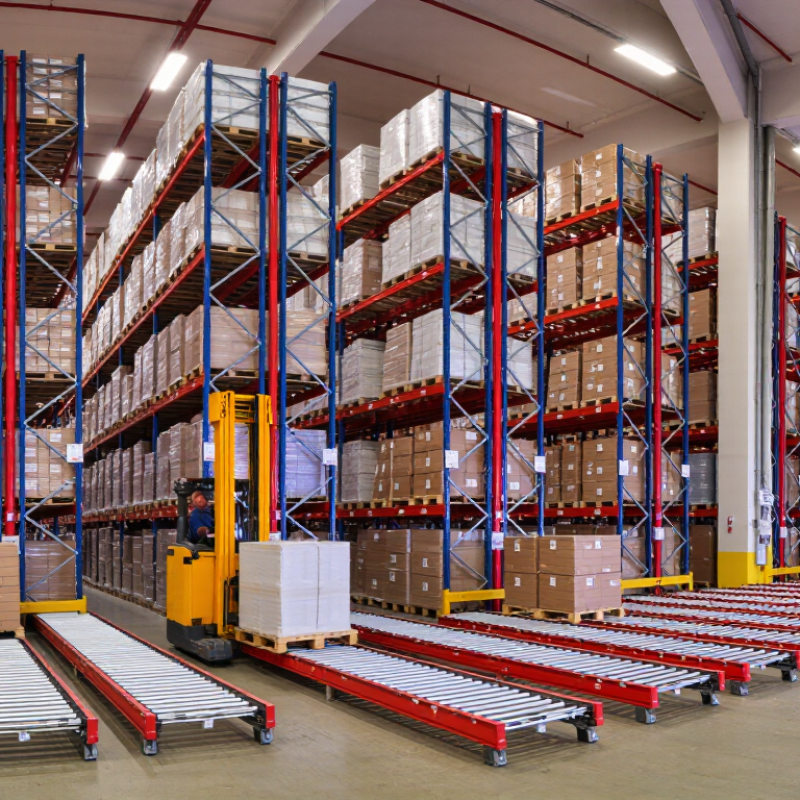
What Is Push Back Storage and How Does It Work?

What Push Back Storage Is and How It Is Structured

Push back storage is a pallet racking system built for dense, selective storage. Its structure usually includes upright frames, load beams, inclined rails, and nesting carts. Each lane stores several pallets behind one another, commonly two to six positions deep. The front pallet sits at the lowest point.

When an operator loads a pallet, the forklift places it on a cart and pushes it backward. Gravity then moves the cart along the slightly inclined rail. During unloading, the front pallet leaves first, and the pallets behind roll forward. This creates a last-in, first-out flow. It is efficient for products with similar stock-keeping units and limited expiration risk.

The system also reduces forklift travel. That matters in busy warehouses. MHI’s 2024 Annual Industry Report found that 55% of supply-chain leaders planned to increase technology investment within two years. Storage density remains part of that investment discussion, although racking alone cannot solve poor slotting.

Push back storage needs careful lane planning. Pallet dimensions, load weight, cart capacity, and floor accuracy all affect performance. Safety checks should confirm rail alignment and frame protection.

One practical weakness is often overlooked: mixed products in one lane can create picking errors. In my experience, operators also underestimate replenishment discipline. Dense storage looks efficient, but an unclear labeling routine can quickly reduce inventory accuracy. The design is not perfect. It trades direct access for better cubic utilization, so product rotation must be reviewed before installation.

The Main Components of a Push Back Storage System

A push-back storage system is built around inclined lanes that hold several pallets deep. Its main components are the structural frame, nested carts, guide rails, and pallet stops. The frame carries the load; rails keep each cart aligned. Small details matter. A bent rail can make movement uneven.

When a forklift places a pallet, it pushes the pallet and cart backward along the lane. Removing the front pallet lets the next cart roll forward under gravity. That simple motion depends on correctly matched cart wheels, lane slope, pallet dimensions, and load weight. Operators should check that pallets sit squarely and that stops remain secure. Poorly matched loads can bind. It happens.

MHI’s 2024 Annual Industry Report, based on a survey of about 1,000 supply-chain professionals, found that 55% planned to increase technology investment. That figure is not specific to push-back racks, but it reflects growing attention to warehouse efficiency. In practice, teams should assess access frequency, forklift compatibility, and inspection routines before choosing lane depth. A deeper lane may save aisle space, yet make stock rotation and fault checks less convenient. The trade-off deserves a real site trial.

How Pallets Move Through the System

What Is Push Back Storage and How Does It Work?

How Pallets Move Through the System

In a push-back rack, each storage lane holds several pallets in depth. A forklift places the first pallet on a wheeled cart near the aisle. The next pallet pushes that cart, and the pallets behind it move backward along the lane. This creates compact storage without requiring a forklift to enter the rack. The lane usually operates on a last-in, first-out basis: the newest pallet is retrieved first.

When an operator removes the front pallet, the remaining carts roll forward to the aisle. Gravity and a slight lane incline may help, while stops and guides control movement. The exact design varies, so operators should follow the rack’s load limits and handling procedures. Pallets need to be stable and compatible with the cart surface. A damaged pallet can snag. That detail is easy to overlook.

Tips: Keep loads centered and inspect pallets before put-away. Move the forklift smoothly; sudden contact can jolt the lane. Check that carts return fully before loading again, and keep the aisle clear. If pallets do not roll as expected, stop and investigate rather than forcing them.

How Push Back Storage Supports Warehouse Operations

Push back storage uses inclined rails or wheeled carts to hold pallets in deep lanes. Forklifts load pallets from the same working aisle. Each new pallet pushes the previous one farther into the lane. Gravity then keeps the stored positions compact. It saves aisle space. In daily warehouse operations, this arrangement supports high-density storage without requiring access to every pallet.

The system works especially well for warehouses handling several pallets of the same product. Operators can replenish a lane quickly and reduce unnecessary forklift travel. Most lanes follow a last-in, first-out flow, so stock rotation requires careful planning. Clear product labels and accurate location records help prevent picking errors. Lane depth, pallet dimensions, floor conditions, and load capacity must be checked before installation. A small mismatch can create unstable movement.

Push back storage also helps separate products by batch, temperature requirement, or dispatch schedule. However, it is not a universal solution. Slow-moving goods may remain hidden behind newer pallets, and mixed pallets can complicate retrieval. The system is efficient, but not forgiving. Regular inspections should check rails, carts, frames, and pallet condition. Staff training matters too. A lane may look organized while aging stock sits unnoticed inside. Reviewing inventory data and physically checking selected lanes can reveal problems that software alone misses.

Where Push Back Storage Works Best and What to Consider

Push-back storage uses nested carts that roll along inclined rails inside a rack channel. A forklift loads pallets from the front. Each new pallet gently pushes the previous one deeper into storage. Removing the front pallet allows the remaining pallets to roll forward. This creates a compact, last-in, first-out system.

It works best where warehouses hold many pallets of similar products. Beverage cases, packaged materials, seasonal goods, and reserve inventory are common examples. It suits facilities with limited floor space and moderate product variety. The 2024 MHI Annual Industry Report found that 74% of supply chain professionals planned to increase technology investment. However, technology alone cannot fix poor storage logic. Push-back racks need clear product grouping, reliable pallet quality, and disciplined forklift operation.

Temperature-controlled warehouses can also benefit, because higher density may reduce the volume requiring cooling. Yet airflow, fire protection, and local rack regulations must be reviewed carefully. The 2024 Warehousing Vision Study reported that 63% of decision-makers expected to adopt more automation by 2028. Push-back storage is not fully automated, but it can reduce travel and handling steps. It is less suitable for strict first-in, first-out inventory, fragile pallets, or products with many individual stock-keeping units. A damaged wheel can interrupt a channel. That detail is easy to underestimate. A site survey should test pallet dimensions, load weight, rotation speed, aisle width, and emergency access before installation. A spreadsheet may suggest high density. Real pallets may disagree.

FAQS

What is push-back storage?

It is a pallet rack system with inclined rails and carts. Pallets sit several positions deep in each lane.

How does loading and unloading work?

A forklift places each pallet at the front and pushes it backward. When the front pallet is removed, stored pallets roll forward.

What inventory flow does it support?

It usually follows last-in, first-out flow. This suits similar products with limited expiration risk, but not strict first-in, first-out needs.

Which products are a good fit?

It works well for grouped pallets, such as packaged materials, seasonal goods, and reserve stock. Too many product types can complicate picking.

How can it improve warehouse operations?

Deep lanes can reduce aisle space and forklift travel. That helps in busy warehouses, though dense storage cannot fix poor product placement.

What should be checked before installation?

Review pallet size, load weight, lane depth, floor accuracy, aisle width, and emergency access. Real pallets may not match the spreadsheet.

What safety and maintenance checks matter?

Inspect rails, carts, frames, and pallet condition regularly. A damaged wheel can stop a lane, even when everything else looks fine.

How can teams reduce picking errors?

Keep each lane clearly labeled and group similar products together. Check selected lanes physically; software can miss aging stock hidden behind newer pallets.

Is push-back storage right for every warehouse?

No. Fragile pallets, mixed stock, and strict stock-rotation needs may make it a poor fit. The trade-off deserves a careful review.

Conclusion

Push-Back Storage is a compact pallet storage system designed to improve space utilization while keeping multiple pallets accessible from a single aisle. Its structure typically includes a sturdy rack frame, inclined rails or nested carts, pallet supports, and safety components that guide loads during storage and retrieval. Pallets are placed from the front, with each new pallet gently pushing the previous one toward the back. When the front pallet is removed, the stored pallets move forward by gravity or controlled rolling action, maintaining an organized last-in, first-out workflow.

This system supports warehouse operations by reducing aisle requirements, increasing storage density, and speeding up pallet handling. It is especially useful for facilities storing a limited range of products in multiple pallets, such as distribution, manufacturing, and seasonal inventory environments. Before installation, operators should consider pallet dimensions, load capacity, product rotation requirements, equipment compatibility, rack height, and safety procedures. Proper layout planning and regular inspections help ensure reliable performance and efficient use of available space.

Ethan

Ethan

Ethan is a seasoned marketing professional with a deep expertise in our company's innovative product line. With a passion for sharing knowledge and insights, he takes the lead in regularly updating our corporate blog, where he explores industry trends, product features, and effective marketing......