Choosing Warehouse Racking is not just a matter of fitting more pallets beneath a roof. It shapes how quickly teams find stock, how safely forklifts move, and how easily a business can adapt when demand changes. A narrow-aisle layout may add storage positions, yet leave less room for turning. Selective pallet racking offers direct access to each pallet, but uses floor space differently. The right answer depends on real operating conditions.
For this guide, warehouse systems specialist Maya Chen sums up the decision: “A rack is only efficient when it fits the way people and inventory move.” Treat that as a practical design principle, not a substitute for a site assessment. Buyers should compare load capacity, pallet dimensions, clear heights, aisle widths, picking methods, and future expansion plans. They should also verify that proposed specifications match the facility and the equipment actually in use. Small details matter. A beam level set too high can disrupt a familiar picking routine.
This 2026 overview compares common Warehouse Racking systems for global buyers, from selective and drive-in layouts to pallet flow and mobile solutions. It considers space use, access, scalability, installation needs, and the questions worth asking suppliers. Product names can sound similar. Performance in your building may not be. One caution: forecasts are imperfect, and a layout that works today may feel restrictive after a product mix changes. Measure carefully, request documented specifications, and have qualified professionals review the final design before purchase.
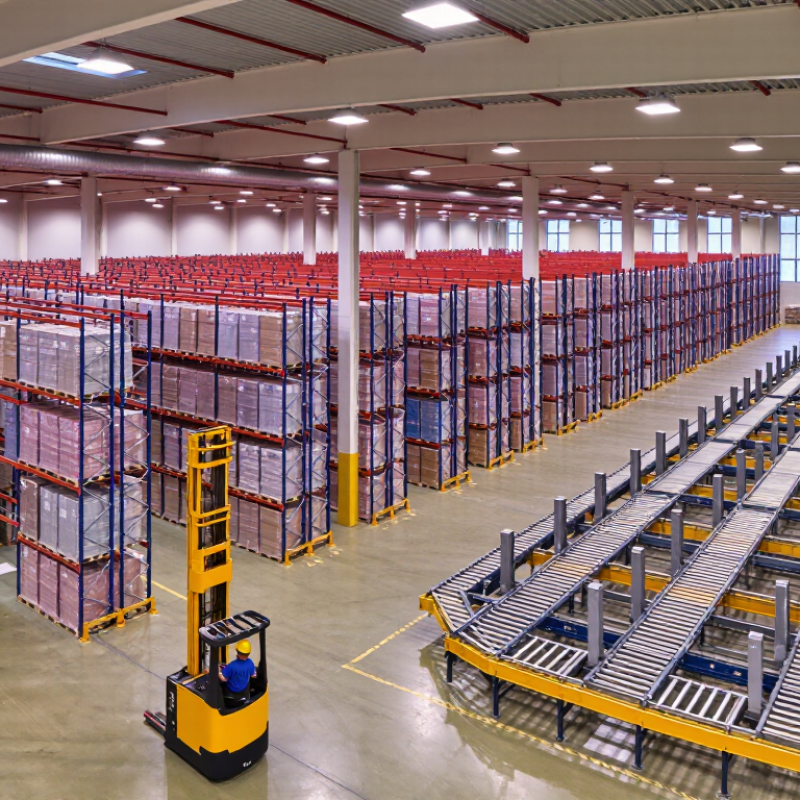
A warehouse racking system is a freestanding structure that stores palletized goods vertically. Upright frames carry horizontal beams, while decking or pallet supports hold each load. Forklifts place pallets into the bays and retrieve them later. The load travels from the pallet to the beams, then through the frames to the floor. That is the basic load path. Clear aisle markings and visible load limits help workers use the structure safely.
Different layouts solve different storage problems. Selective racks offer direct access to each pallet; drive-in designs trade some access for denser storage. The right choice depends on inventory turnover, pallet dimensions, lifting equipment, and building height. A system can look efficient on paper yet slow down picking if aisles are too tight. MHI’s 2024 Annual Industry Report found that 88% of respondents expected to adopt AI within five years. That figure concerns supply-chain technology, not racks themselves, but it points to growing interest in connected operations. Digital inventory tools can help locate stock; they cannot correct poor layout decisions. Measure carefully. Recheck the plan against real pallet loads and forklift turning paths.
| System Type | How It Works | Pallet Access and Typical Flow | Common Applications | Key Considerations |
|---|---|---|---|---|
| Selective Pallet Racking | Loads rest on horizontal beams supported by upright frames. Forklifts place and retrieve pallets from the aisle side. | Direct access to each pallet; commonly supports both FIFO and LIFO inventory practices, depending on warehouse procedures. | Warehouses with many product lines, varied stock, or frequent pallet-level picking. | Offers high selectivity, but requires aisles for forklift travel and typically provides less storage density than deep-lane systems. |
| Double-Deep Pallet Racking | Two pallet positions are arranged one behind the other on each side of an aisle. A deep-reach truck or suitable handling equipment accesses the rear position. | Front pallets are accessed first, so the system generally works best with LIFO handling within each lane. | Operations seeking more pallet positions than standard selective racking while retaining access by SKU lane. | Improves storage density but reduces immediate access to rear pallets and requires compatible equipment and consistent lane management. |
| Drive-In / Drive-Through Racking | Forklifts enter structural lanes and place pallets on side rails. In drive-in layouts, loading and retrieval occur from the same end; drive-through layouts allow access from both ends. | Drive-in is generally LIFO. Drive-through can support FIFO when pallets are loaded at one end and retrieved at the other. | Large quantities of similar products, such as batch or seasonal stock. | Provides high storage density but has less selectivity than selective racking. Careful forklift operation and lane planning are important. |
| Pallet Flow Racking | Gravity rollers or wheels move pallets from the loading end toward the retrieval end within slightly inclined lanes. | Designed for FIFO: pallets are loaded at one end and retrieved at the other. | High-throughput operations, date-sensitive goods, and products managed by production or expiry sequence. | Can improve rotation and reduce forklift travel inside storage lanes. Pallet condition, lane design, and flow components affect reliable operation. |
| Push-Back Racking | Each new pallet pushes previously stored pallets backward along nested carts or inclined rails within a lane. | Pallets are normally loaded and retrieved from the same aisle; each lane typically operates LIFO. | Multiple pallets per SKU where greater density is needed without forklift entry into the rack. | Offers more depth per aisle than selective racking, but individual pallet access is limited and lane quantities should match inventory patterns. |
| Carton Flow Racking | Cartons or totes move by gravity along roller or wheel tracks from a replenishment side to a picking face. | Typically supports FIFO at the carton or tote level, with replenishment and picking performed from opposite sides. | Piece-picking operations with fast-moving items and organized order-picking workflows. | Useful for separating replenishment from picking. Track layout and container dimensions should suit the products being handled. |
| Cantilever Racking | Horizontal arms project from vertical columns to support loads without front columns obstructing the storage face. | Usually provides direct access to individual loads from the aisle. | Long or irregular items such as lumber, pipes, bars, and sheet materials. | Arm length, column spacing, bracing, and rated capacity must be selected for the actual load dimensions and weight. |
| Mobile Racking | Rack rows sit on powered or manually operated bases that move along floor rails, opening an access aisle where needed. | Direct access is available to the selected aisle; only a limited number of aisles may be open at one time. | Facilities where floor space is constrained and access can be scheduled by task or location. | Can increase space utilization, but aisle availability, floor condition, operating procedures, and safety controls need careful planning. |
| What Warehouse Racking Systems Are | Warehouse racking systems are engineered structures that organize and support stored goods, commonly on pallets, cartons, or long loads. | Access depends on the rack layout, storage depth, handling equipment, and the required stock-rotation method. | Distribution centers, manufacturing facilities, cold stores, and other storage operations. | System selection should account for load dimensions and weight, inventory turnover, building conditions, material-handling equipment, and applicable local requirements. |
| Planning note: Rack capacity and configuration are project-specific. Have a qualified design professional verify load ratings, layout, anchorage, floor conditions, clearances, and applicable building and fire-safety requirements before installation or modification. | ||||
It gives forklifts direct access to each pallet. It suits warehouses with many product lines and frequent picking. It uses more aisle space.
Drive-in racking suits larger batches of similar goods. Pallet-flow lanes move stock toward the picking face. A damaged roller can slow the lane.
They support long, awkward items such as pipe, timber, and furniture panels. Measure each load before choosing the rack.
Both can add picking locations for cartons and small parts. Check the building’s clear height and leave room for lighting and sprinklers.
Record the forklift’s turning radius, lift height, and operating clearance. Compare them with aisle width, beam height, and building height. Measure twice.
Pickers may travel too far between locations. High-turnover goods often need shorter routes, while slow-moving reserve stock may tolerate denser storage. That trade-off is easy to miss.
Confirm pallet dimensions, loaded weight, floor capacity, and rack load ratings with qualified professionals. A drawing alone is not enough.
Walk the proposed layout with equipment operators. Test a few typical picking routes before installation. One awkward corner can slow a shift. I may be missing something, but today’s pallet mix may not last.
Warehouse Racking systems organize goods vertically and horizontally, helping warehouses use floor space efficiently while keeping inventory accessible. Common options include selective pallet racks for direct access to many product lines, drive-in racks for high-density storage of similar goods, push-back and pallet-flow systems for controlled stock rotation, and cantilever racks for long or irregular items. Choosing among them depends on inventory size, weight, turnover, SKU variety, available space, and the handling equipment used in the facility.
Global buyers should also consider load capacity, installation requirements, worker safety, applicable local standards, total cost of ownership, delivery, and supplier support. The best system in 2026 is not a single design for every operation: it is the configuration that fits the warehouse’s products and workflows, supports reliable equipment movement, and can adapt as storage needs change. Careful planning and regular inspections help maintain safe, efficient operations over time.

 Luyuan Racks